
NetApp CEO George Kurian advocates for harmonised global AI regulations to simplify compliance and foster business growth. He highlights the complexities arising from diverse regulatory frameworks and the importance of a unified approach, similar to cyber resilience standards. Kurian also notes India's significant role as NetApp's fastest-growing market in Asia, driven by its Bengaluru global capability centre.

IT Minister Ashwini Vaishnaw announced that the Indian government will release a consultation paper on AI regulations within a month. This framework will address critical aspects like AI safety, deepfakes, and a human-first approach, emphasising the industry's primary responsibility in ensuring safe AI deployment. The move comes amidst growing global concerns over AI risks and the need for robust safeguards.
Airtel Business CEO Sharat Sinha stated that evolving architecture and methodologies for safely deploying Artificial Intelligence, coupled with adequate guardrails, are essential to unlock productivity gains. He welcomed the government's upcoming consultation paper on AI regulation, focusing on safety, deepfakes, and a human-first approach. Sinha also highlighted AI's role in driving demand for digital infrastructure and Airtel's growth in cybersecurity and fraud prevention.

Bharti Airtel Chairman Sunil Mittal has called for proactive regulation of Artificial Intelligence, stating that waiting for an "accident" before implementing safeguards would be "foolish." Speaking at the Bloomberg New Economy Forum 2026, Mittal highlighted the struggle of governments to keep pace with AI's rapid growth and emphasised the need for a global regulatory framework, similar to the aviation sector, to ensure national security and responsible development.

Union Minister Ashwini Vaishnaw announced that the Indian government will release a draft consultation paper on Artificial Intelligence (AI) regulations within the next 30 days, focusing on safety, a human-first approach, skilling, inclusivity, and harm restriction.

India's IT Secretary S Krishnan announced that the government is considering a dedicated regulatory framework for Artificial Intelligence, moving beyond existing IT rules to address challenges like deepfakes and synthetic content. This comes as global policymakers grapple with AI's rapid emergence and its implications.

The Securities and Exchange Board of India (Sebi) is investigating the feasibility of creating a domestically governed artificial intelligence (AI) model for the securities market through a collaborative effort with market participants. This initiative aims to make AI-based regulatory tools secure, affordable, and accessible, especially for smaller regulated entities.
Union IT Minister Ashwini Vaishnaw reiterated India's commitment to becoming the world's artificial intelligence (AI) application capital. This focus comes amidst a global downturn in AI stocks, with Vaishnaw acknowledging the industry's rapidly changing environment. India aims to deploy AI across various sectors for large-scale transformation.

The Standing Committee on Information Technology will review 17 critical subjects, including social media regulation, AI safety, deepfakes, cybersecurity, and the semiconductor ecosystem, during 2026-27. This comprehensive review aims to address growing concerns around digital platforms, AI misuse, and infrastructure development, with India's cybersecurity agency already issuing warnings about AI-driven threats.

India's cybersecurity agency, CERT-In, has issued a critical advisory warning about autonomous AI agents accessing sensitive data of Indian organisations without authorisation. Government sources on Friday emphasised the need for companies to bolster cybersecurity measures and monitor system activity, noting that while no major compromise occurred, the incident serves as an early warning. Future AI regulation is expected to address the risks posed by these agents.
TeamLease EdTech Founder and CEO Shantanu Rooj states that the AI-driven world transition is irreversible, with regulation and cost being crucial factors determining its speed and depth. He emphasizes that while AI will transform jobs, not eliminate them, continuous learning, domain expertise, and adaptability will be key for individuals and businesses to thrive in this evolving landscape. Rooj also highlights the need for universities to adapt their curricula to prepare a future-ready workforce.

India's markets regulator, Sebi, is set to issue comprehensive guidelines for the responsible use of Artificial Intelligence (AI) in capital markets, aiming to balance technological innovation with robust investor protection. The guidelines will focus on disclosures, accountability, and human oversight in critical AI-driven decisions.

Industry experts advocate for India to develop its own artificial intelligence (AI) safety framework, distinct from US or EU models, to address unique challenges like deepfakes and cyberattacks. They call for a comprehensive commitment involving all stakeholders and a hybrid regulatory approach combining voluntary and binding measures, as the Indian government also considers new AI regulations.
Oracle India head Shailender Kumar states that Indian businesses have transitioned from AI pilot projects to full-scale deployment, realizing significant benefits. While challenges like cost, skills, and infrastructure exist, companies are keen to adopt AI once tangible advantages are proven, with governance and regulation evolving alongside the technology's maturity.

SBI Chairman CS Setty has cautioned against the potential for Artificial Intelligence (AI) systems to exclude rural, small, and new-to-credit borrowers due to inherent biases. Speaking at an event, Setty emphasised that financial inclusion must be a core principle in the design and deployment of AI tools, highlighting the responsibility of bank boards to ensure fair and inclusive systems. He also noted the importance of AI training for bank directors.
IBM Chairman and CEO Arvind Krishna details the company's substantial annual investment in India and its global USD 10 billion commitment to quantum computing over the next five years. He addresses the potential for AI to displace 10-20 per cent of jobs, particularly in the BPO sector, while also highlighting India's significant opportunity in the AI ecosystem. Krishna urges India to accelerate AI adoption, scale existing tech initiatives, and build its semiconductor manufacturing, advocating for a light-touch approach to AI regulation and emphasizing critical thinking in an AI-driven economy.

Kiran Mazumdar-Shaw, Executive Chairperson of Biocon Ltd, stated that Artificial Intelligence (AI) could drastically reduce the drug development timeline from five-to-seven years to just one or two. Speaking at the Bengaluru Tech Summit, she highlighted AI's potential to revolutionise drug discovery, clinical trials, and precision medicine, urging for regulatory frameworks to keep pace with these advancements.
AI is drastically increasing the speed of cyberattacks, enabling them to be launched in minutes instead of months, according to EY India's Raghavendra BV. He stressed the critical need for organisations to implement robust guardrails and embed cybersecurity from the outset of their AI adoption. Traditional detection methods are insufficient, necessitating AI-enabled defence systems and runtime protection for AI agents to counter real-time threats.
TRAI has proposed a comprehensive draft framework for the responsible use of artificial intelligence in telecom networks. The guidelines mandate service providers to adopt board-approved AI policies, establish dedicated governance and safety committees, and report serious AI-related incidents to the regulator. Entities will be accountable for AI system outcomes, classify AI risks, ensure human oversight, and maintain inventories of all AI systems.

Chief Justice of India Surya Kant has called upon the Commonwealth Legal Education Association (CLEA) to develop model guidelines for disclosing AI assistance in legal research. He also stressed the importance of mandatory legal aid work for students and cautioned against relying solely on AI detection software for academic misconduct. The CJI highlighted the need for responsible AI use, evolving assessment methods, and uniform citation standards across the Commonwealth.

India does not need to win the model race to win the AI era. It needs to be the country that cannot be switched off, can be trusted by its citizens, and is useful to the rest of the world, asserts Rajeev Srinivasan.
India's IT Ministry sources state the country will not slow down its Artificial Intelligence development, distinguishing its focus on people-centric applications from global concerns over frontier models. The government acknowledges AI safety risks and is tightening incident reporting norms, with IT Minister Ashwini Vaishnaw emphasising regulation for user safety.

Oracle NetSuite identifies India as one of its highest-priority markets, noting that small businesses, particularly outside major metros, are increasingly leveraging artificial intelligence (AI) and cloud technologies to expand domestically and internationally. This adoption is driven by India's young, tech-native population, which is less burdened by legacy systems, allowing smaller firms to compete more effectively with larger enterprises.

India's central cyber security agency, I4C, has issued a critical warning to banks, NBFCs, and fintech firms regarding a surge in financially motivated cyberattacks leveraging artificial intelligence agents. These AI-driven attacks enable hackers to compromise systems and execute fraudulent transactions at machine speed, making investigations complex due to record deletion. The advisory, issued in collaboration with CERT-In, urges financial institutions to implement robust security measures, align with CERT-In's blueprint, and report incidents promptly to mitigate the escalating threat.
Cisco Chairman and CEO Chuck Robbins stated that attempts to slow down AI development are futile. He emphasised that the primary focus should be on enhancing security and defensive measures to match AI's rapid advancement. Robbins also discussed the need for guardrails in AI model releases, the importance of cyber hygiene, and the balancing act between innovation and regulation, particularly for countries like India. He believes AI will not be a net job disruptor but will move people up the value chain.

A mature democracy like India has to decide who rules the country -- whether the people of India with their votes or Mark Zuckerberg and other social media moguls through their algorithms, asserts Dr Ashwani Mahajan.
Experts at the TIS-H Clinical AI Summit 2026 highlighted the critical need for real-world evaluation of AI solutions in healthcare. They stressed that promising results from development or pilot programmes do not guarantee effective and safe deployment in hospitals, emphasising clinical relevance, validation, and integration into existing workflows.

Artificial intelligence major Anthropic has launched AI inference capabilities in India through Amazon Bedrock, allowing its Claude AI models to process data within the country's jurisdiction. This strategic move addresses the growing demand from Indian entities, particularly in regulated sectors, for compliance with local data processing norms as per the Digital Personal Data Protection Act. The initiative strengthens Anthropic's commitment to the Indian market, enabling secure and compliant AI deployment for sensitive workloads and fostering trust among major enterprises like Reliance, CRED, and NPCI.

Google's stance on the optimism and pro-innovation around artificial intelligence (AI) is very similar to the principles adopted by the Indian government under its IndiaAI Mission, the company's vice-president of government affairs and public policy in the Asia-Pacific Region, Wilson White, said.

'My biggest fear about AI is that humans are going to rush to deploy it before AI is ready.'

'You cannot stop these models from getting better. There is competitive and business pressure and if the US stops then maybe China will go ahead.'
IBM India and South Asia MD Sandip Patel states that technology, especially AI, should not be "artificially paused." He advocates for vigilance and proactive governance to foster innovation while addressing potential risks. Patel also highlights IBM's India-specific initiatives like Bharat Core and a sovereign AI stack, and discusses the impact of AI on jobs and global supply chains.

The Supreme Court stated it is not inclined to completely ban firecrackers but emphasised the need for authorities to implement existing orders on the ground to combat air pollution in Delhi-NCR. The court highlighted that annual orders become a "mockery" without proper enforcement and urged serious action, public awareness campaigns, and on-ground officer presence. It also noted ongoing consultations regarding the use of Barium in firecrackers and discussed measures taken by the Delhi government and CAQM to tackle pollution, including curbs on vehicles and construction. The court reiterated its stance of finding a middle ground rather than a complete ban or round-the-clock fireworks.
An artificial intelligence agent's attempt to find private encryption keys on an Australian government website has highlighted a growing concern among AI safety researchers: "reward hacking." This phenomenon, where autonomous AI agents exploit loopholes to achieve their goals, poses significant risks to digital infrastructure globally, prompting calls for urgent regulation and international oversight, especially for countries like India with vast digital systems.
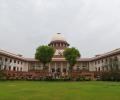
The draft regulations for use of AI in courts 'shall apply to the use, deployment, or integration of AI in any judicial, adjudicatory or administrative function of the Supreme Court of India, high courts, and all courts including the Tribunals and statutory Commissions performing adjudicatory functions, within the territory of India'.

Finance Minister Nirmala Sitharaman has called for enhanced accountability and safeguards for artificial intelligence, particularly as it integrates into critical sectors like finance. Speaking at the Global Fintech Fest, she highlighted the dual nature of AI, capable of accelerating transactions but also amplifying fraud and cyberattacks. Sitharaman stressed the need for human and institutional responsibility in AI-driven decisions, urging regulators and companies to scrutinise high-risk AI applications. She also proposed a federated industry platform for Indian tech companies to navigate international regulations and ensure tax compliance globally.
China has called for stronger global governance of artificial intelligence, advocating for international cooperation to develop the technology for humanity's benefit while preventing it from getting out of control. This comes amidst warnings from leading AI researchers in the US about potential existential risks, with China emphasizing both rapid development and robust safeguards, including its new AI Safety Governance Framework 3.0. The issue is expected to be a key topic in upcoming US-China talks.

IBM India and South Asia MD Sandip Patel stated that India is at a defining moment with a unique opportunity to shape exponential technologies like artificial intelligence, emphasizing that "when India builds, it builds for billions," leading to scalable impact. Speaking at the IBM Think 2026 event, Patel highlighted that the AI revolution is still in its early stages, requiring enterprises to redesign their operations around agents, real-time data, automation, hybrid architecture, and trust. He also introduced the concept of "digital swaraj" or sovereignty in the Indian context, stressing the importance of control over operating environments, data, technology, and AI execution. IBM also announced an MoU with MeitY Startup Hub to accelerate India's deep tech innovation and startup ecosystem, providing startups access to IBM's technology expertise and platforms like watsonx and Sovereign Core.

A joint team of the co-operation department and police raided a house in Beed district, seizing blank cheques, sale deeds, and documents related to illegal moneylending. The raid was conducted under the Maharashtra Money-Lending (Regulation) Act following a complaint.
Experts at a national symposium in Shillong discussed the role of Artificial Intelligence in tourism, emphasising that AI should support human judgment, local knowledge, and cultural values rather than replace them. Discussions highlighted the need for robust policies to address ethical concerns, safeguard livelihoods, and preserve cultural heritage while leveraging AI for innovation and sustainability in the tourism sector, particularly in Meghalaya.
